Tangier tours compared: from a day trip to 15 days
| Tour | Route in brief | Ends in |
|---|---|---|
| Day trip | Rif Mountains, guided walk and free time in Chefchaouen | Tangier |
| 2 days | Optional Tetouan, a night in Chefchaouen, optional Volubilis and Meknes | Fes |
| 4 days | Chefchaouen and Fes, Ifrane, Merzouga, Todra and Dadès, Aït Benhaddou | Marrakech |
| 7 days | Chefchaouen, Volubilis, a guided day in Fes, the desert, Marrakech city tour | Marrakech |
| 10 days | Tangier and Cap Spartel, Tetouan, Meknes, a full desert day, a guided day in Marrakech | Marrakech |
| 15 days | Adds a full day in Chefchaouen, Taliouine, Taroudant and Essaouira | Marrakech |
The 4-day tour is the fastest way to cross the country to Marrakech via the Sahara, but its days are long. The 7- and 10-day routes add time in Fes and Marrakech and feel much more relaxed.
Why start a Morocco tour from Tangier?
Tangier is the natural entry point if you are travelling through Spain. Fast ferries from Tarifa reach the city-centre port in about an hour, and Tangier's airport has direct flights from several European cities. Starting in the far north also means a Morocco tour can run in one direction, from the green Rif Mountains to the Sahara and Marrakech, without backtracking.
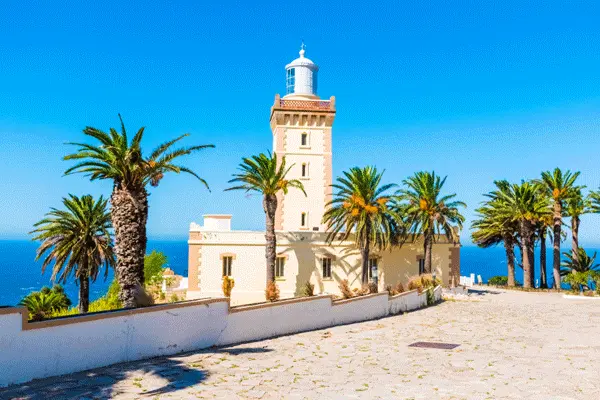
The north has a different character from the rest of the country, shaped by Andalusian and Spanish influence. Before you head south, consider a day in Tangier itself for the Kasbah, the medina and Cap Spartel, or a stop in Tetouan, whose medina is a UNESCO World Heritage site. Our Tangier and northern Morocco travel guide covers what to see.
Chefchaouen: day trip or overnight?
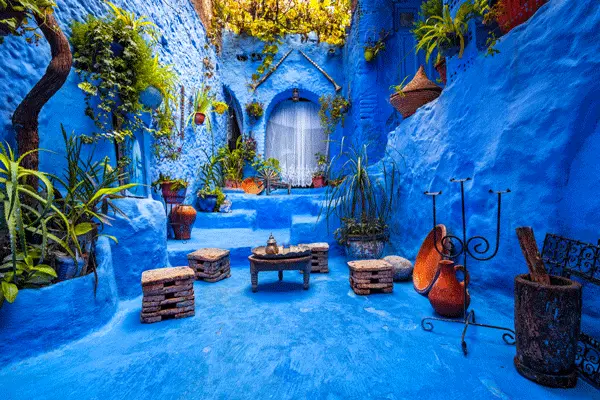
A day trip gives you about 4 to 5 hours in the blue city, enough for the medina, lunch and photographs. Staying the night on the 2-day or longer tours lets you see Chefchaouen in the quiet of the evening and early morning, after day visitors have left.
Tangier to Marrakech tour via Fes and the Sahara desert
All the multi-day routes follow the same backbone. From Chefchaouen you continue to Fes, usually via the Roman ruins of Volubilis and often the imperial city of Meknes. From Fes the road crosses the Middle Atlas via Ifrane and the cedar forest, home to Barbary macaques, and drops through the Ziz Valley to Merzouga on the edge of the Erg Chebbi dunes.
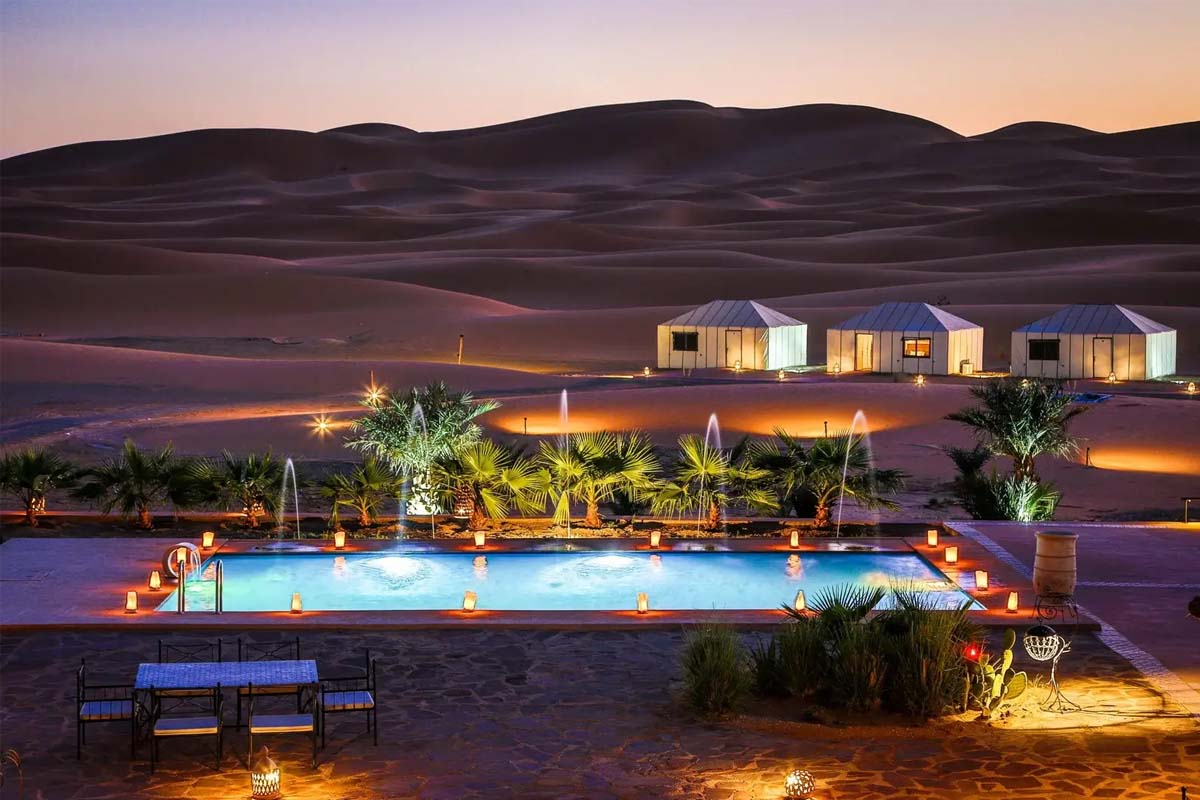
In the desert you ride camels to camp for sunset, subject to camel availability that day; if none are free, you reach camp by 4x4 with a sunset stop and ride the next morning. In the comfort camp each tent is private, normally for two, with its own bathroom and toilet, and a partner camp with air-conditioned tents is also used. From Merzouga the route turns west through the Todra Gorge and the Dadès Valley to Aït Benhaddou and over the High Atlas to Marrakech.
Learn more about the dunes and the camps in our Merzouga and Sahara desert guide.
Planning tips for tours from Tangier
- Ferry arrivals: send us your crossing time and port. Tangier Ville is in the city centre; Tanger Med, used by most ferries from Algeciras, is roughly an hour east of the city.
- Documents: carry your passport for the crossing. Visa rules depend on nationality, so check with your embassy or official sources before travel.
- Money: the dirham (MAD) is a closed currency; withdraw cash from an ATM on arrival for lunches, entrance fees and tips.
- Season: spring and autumn are ideal for a north-to-south route. Summer is hot in the desert and busy on the ferries, especially in August; winter is wetter in the north and cold at night in the Sahara.
- Accommodation: choose a comfort or luxury category. Merzouga itself has no luxury hotel category, so the upgrade applies in the Dadès Valley and at the desert camp.
- Language: driver-guides work in English, French, Spanish and Italian; Spanish and Italian depend on availability for your dates.
Packages cover transport and accommodation in Morocco as described on each tour page; international flights and ferry tickets are not included. Travelling with family or friends? See private group tours in Morocco.