Where to Stay in Morocco: Riads, Kasbah Hotels and Desert Camps

From Traditional Riads to Luxury Desert Camps

Quick answer

Deciding where to stay in Morocco usually means choosing between three styles: a riad (a courtyard house in the old medina) in cities such as Marrakech, Fes and Chefchaouen; a kasbah hotel in the Atlas valleys, Dadès and Ouarzazate; and a desert camp in the Erg Chebbi dunes near Merzouga. On private tours you pick a comfort or luxury category; the upgrade applies in the Dadès Valley and at the desert camp, as Merzouga itself has comfortable rather than luxury hotels.

Key facts

  • CitiesRiads and guesthouses in the medinas of Marrakech, Fes, Chefchaouen and Essaouira
  • Atlas and kasbah valleysKasbah hotels in the Dadès Valley, Skoura and around Ouarzazate
  • SaharaDesert camps in the Erg Chebbi dunes near Merzouga
  • Tour categoriesComfort or luxury
  • Merzouga hotelsComfortable, clean, well-serviced; no luxury category
  • Comfort desert campPrivate tents with own bathroom and toilet, normally for 2

In Morocco, where you lay your head at night is more than just a place to sleep—it's an integral part of the travel experience. The country offers a dazzling array of accommodation choices that are as diverse and enchanting as its landscapes. Forget standard chain hotels; here, you can sleep in a centuries-old palace, a chic desert tent, or a restored fortress. Choosing the right accommodation in Morocco can transform a great trip into an unforgettable one. This guide will navigate you through the world of Moroccan riads, hotels, Sahara desert camps, and more, ensuring you find the perfect stay for your adventure.

The Soul of Morocco: Understanding Riads

When you picture staying in Morocco, you're likely imagining a riad. These traditional homes are the heart and soul of Moroccan hospitality and architecture, offering a serene escape from the bustling medinas.

What Exactly is a Riad?

A riad (meaning 'garden' in Arabic) is a traditional Moroccan house built around a central Andalusian-style courtyard or garden. This inward-facing design was created for privacy and to keep the interior cool. The courtyard, often featuring a fountain and decorated with intricate tilework (zellige), is the focal point of the home. Rooms open onto balconies overlooking this central space, creating an atmosphere of tranquility and intimacy. Today, many of these architectural gems in cities like Marrakech, Fes, and Essaouira have been beautifully restored into guesthouses, making them the most sought-after accommodation in Morocco.

The Riad Experience

Staying in a riad is an immersive cultural experience. You're not just a guest in a hotel; you're welcomed into a home. The staff are often local, providing warm, personal service that larger hotels can't match. Mornings typically begin with a delicious, homemade Moroccan breakfast served in the courtyard—think fresh bread, pastries, jams, and mint tea. Many riads also have stunning rooftop terraces, perfect for watching the sunset over the medina with a glass of tea in hand.

Pros and Cons of Staying in a Riad

  • Pros: Authentic experience, stunning architecture, personalized service, peaceful atmosphere, often great value for money.
  • Cons: Can be hard to find in the labyrinthine medina, rooms can sometimes be smaller than in hotels, not all have amenities like large pools or gyms.

Modern Comfort: Hotels in Morocco

While riads offer a unique cultural immersion, Morocco also boasts a wide range of modern hotels catering to every budget and travel style. From international luxury brands in major cities to charming boutique hotels, you'll find plenty of options that prioritize comfort and convenience.

When to Choose a Hotel Over a Riad

A hotel might be a better choice if you value certain amenities. If you're traveling with a family and need a large swimming pool, or if you prefer the familiarity and services of a large hotel chain, a hotel in a newer part of town like Gueliz in Marrakech or the Ville Nouvelle in Fes could be ideal. They are also easier to access by car or taxi, which can be a plus if you have a lot of luggage or mobility issues. Business travelers often prefer hotels for their dedicated workspaces and reliable high-speed internet.
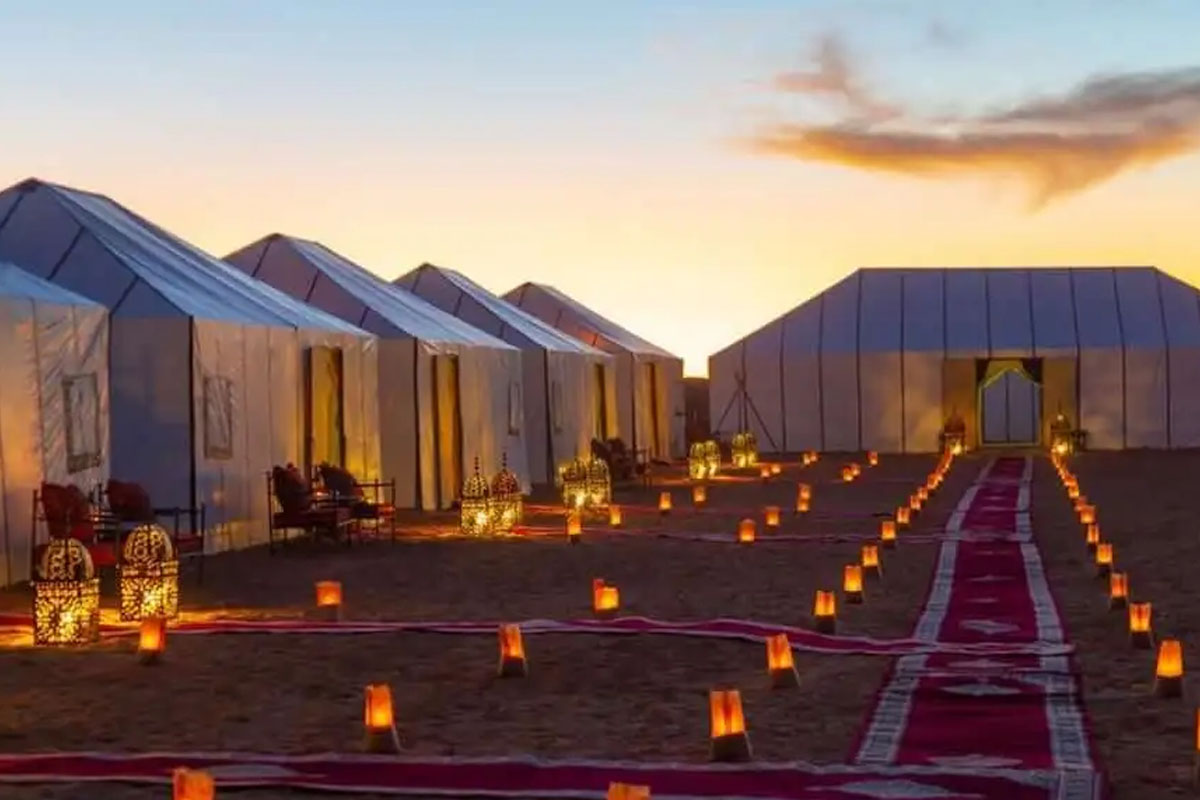
A luxury desert camp tent in the Sahara Desert at dusk.
Experience a magical night under the stars in a luxury Sahara desert camp.

A Night Under the Stars: Sahara Desert Camps

No trip to Morocco is complete without experiencing the majestic Sahara Desert, and a stay in a desert camp is the ultimate way to do it. Waking up to the sun rising over endless sand dunes is a memory that will last a lifetime. This is not just accommodation; it’s an adventure.

Erg Chebbi vs. Erg Chigaga: Choosing Your Desert

The two main dune systems for tourist camps are Erg Chebbi (near Merzouga) and Erg Chigaga (near M'hamid). Erg Chebbi's dunes are taller and more accessible, making it the more popular choice. Erg Chigaga is more remote and requires a longer 4x4 journey, offering a wilder, more off-the-beaten-path experience.

Standard vs. Luxury Camps: What's the Difference?

A standard desert camp offers a rustic but comfortable experience with basic Berber tents, shared bathroom facilities, and a communal dinner. A luxury desert camp in Morocco elevates the experience significantly. You'll find spacious private tents with en-suite bathrooms, hot running water, king-sized beds, and gourmet meals. Many luxury camps also offer activities like sandboarding and evening entertainment around a campfire.

Beyond the Obvious: Other Unique Stays

  • Dars: Similar to riads but typically smaller and without the central garden (they have a courtyard, but it might not be planted). They offer a very intimate and homely feel.
  • Kasbahs: These are ancient fortresses, often made of mudbrick, that have been converted into hotels. Staying in a Kasbah, particularly in the Atlas Mountains or near Ouarzazate, feels like stepping back in time.
  • Guesthouses (Maisons d'Hôtes): This is a broad category, but it generally refers to smaller, owner-operated establishments that offer a personal touch similar to a B&B.

Conclusion: Your Perfect Moroccan Stay Awaits

The beauty of accommodation in Morocco lies in its variety. You can mix and match, spending a few nights in a bustling Marrakech riad, a week in a coastal hotel, and a night in a serene desert camp. Each one offers a different window into the rich culture and hospitality of this incredible country.

Ready to find the perfect riad or desert camp for your journey? Contact our travel experts today, and we'll help you design a custom itinerary with accommodations that perfectly match your style and budget.

Riad, hotel or kasbah: which accommodation in Morocco suits you?

TypeWhere you find itBest forThings to know
RiadOld medinas of Marrakech, Fes, Chefchaouen, EssaouiraCouples, culture lovers, walking to the souksOften reached on foot down narrow lanes; rooms vary in size
Dar or guesthouseMedinas and small townsA homely, personal stayFewer rooms, simpler facilities
Modern hotelNew towns such as Gueliz in Marrakech or the Ville Nouvelle in FesFamilies wanting a pool, travellers with mobility needsEasy car access, less local atmosphere
Kasbah hotelAtlas valleys, Dadès, Skoura, OuarzazateRoad trips through the southEarthen architecture, valley views, often half board
Desert campErg Chebbi near MerzougaA night in the dunesReached by camel or 4x4; take a small overnight bag

Most travellers mix several types. A typical first trip combines two or three nights in a Marrakech riad, a kasbah night on the road south and one night in a desert camp. Our Marrakech travel guide explains which medina neighbourhoods are most convenient.

Comfort vs luxury: how accommodation works on our private tours

Every private tour can be booked in a comfort or a luxury category. The route, vehicle and driver-guide stay the same; what changes is the standard of some of the places you sleep.

  • Comfort: well-located, clean and characterful riads, guesthouses and kasbah hotels with good service.
  • Luxury: upgraded properties where the difference is most noticeable, especially in the Dadès Valley and at the desert camp.
  • Merzouga: the village has comfortable, clean, well-serviced hotels but no luxury category, so a hotel night in Merzouga is the same in both categories.

If you are planning a high-end trip with upgraded stays throughout, read about luxury private Morocco tours. For mid-range travel, the comfort category gives authentic stays at a lower cost.

Sahara desert camps in Erg Chebbi: what to expect

Morocco's two best-known dune seas are Erg Chebbi, near Merzouga, and Erg Chigaga, near M'hamid. Erg Chebbi has the tallest, most accessible dunes and is where our desert tours stay. Because the area has many camps, complete isolation cannot be guaranteed, and we do not organise wild or mobile private bivouacs.

  • Comfort camp: private tents, normally for two people, each with its own bathroom and toilet.
  • Partner camp: air-conditioned tents, especially welcome from late spring to early autumn.
  • Nomad village option: on longer desert stays, one night at a camp with a nomad village can be combined with a night at the comfort camp with hot shower and private tent.

You usually reach camp by camel at sunset. The ride depends on camel availability that day; if none are free, you go by 4x4 with a sunset stop on the dunes and ride camels the next morning. Leave your main luggage behind and bring a small bag with warm layers, a torch and toiletries. Read more in a night in a Merzouga desert camp.

Where to stay in Morocco city by city

  • Marrakech: stay in a riad inside the medina to walk to Jemaa el-Fna and the souks, or in Gueliz or Hivernage for modern hotels, wider streets and easier taxi access.
  • Fes: a riad in Fes el-Bali puts you in the heart of the UNESCO medina; the Ville Nouvelle has larger hotels if you prefer car access. Our guide to Fes and Meknes explains the layout.
  • Chefchaouen: small guesthouses in the blue medina, many with roof terraces facing the Rif Mountains. Expect steps and steep lanes.
  • Essaouira: riads inside the walled medina, a short walk from the port and the beach.
  • Dadès Valley and Ouarzazate: kasbah hotels with valley views, ideal for a night on the road between Marrakech and the Sahara.
  • Merzouga: comfortable hotels at the foot of the dunes, or a camp inside Erg Chebbi for the full desert experience.

If you only have one or two nights in a city, staying central saves time; on longer stays, a quieter neighbourhood can be more restful.

Practical tips for booking stays in Morocco

  • Medina access: cars cannot enter most medinas. Riad staff or porters usually meet you at the nearest gate and carry luggage, so pack a bag you can manage on cobbles.
  • Half board: in kasbah hotels and desert camps, dinner is often included, as there are few restaurants nearby.
  • Heating and cooling: riad rooms can be cool in winter and warm in summer; ask about heating or air conditioning.
  • Noise: the call to prayer is part of medina life; light sleepers may want earplugs.
  • Alcohol: some riads and guesthouses do not serve alcohol.
  • Season: book early for spring, autumn, Christmas and Easter, when the best riads fill fast.

Planning a whole trip? Browse all Morocco tours and itineraries and choose the accommodation category that suits you.

Frequently asked questions

Is it better to stay in a riad or a hotel in Morocco?

A riad is usually better for atmosphere: you sleep in a traditional courtyard house in the medina, close to the souks and sights. A modern hotel is better if you need a large pool, lifts or direct car access. Many travellers stay in a riad in the cities and a hotel or kasbah elsewhere.

What is a kasbah hotel?

A kasbah hotel is a fortified earthen building, or one built in that traditional style, converted into accommodation. They are common in the Dadès Valley, Skoura and around Ouarzazate, and usually offer valley or mountain views, a restaurant and dinner, making them a natural stop on routes to the Sahara.

Do desert camp tents have private bathrooms?

On our tours, yes. The comfort camp in Erg Chebbi has private tents, normally for two people, each with its own bathroom and toilet. A partner camp with air-conditioned tents is also used. Some basic camps elsewhere have shared facilities, so it is worth checking when comparing tours.

Can I choose my own hotels on a private tour?

Yes. If you have already booked a riad or hotel, or have a favourite place, tell us and we will plan the route around it. Otherwise we suggest accommodation that matches your chosen comfort or luxury category and the pace of the itinerary.

Are there luxury hotels in Merzouga?

Merzouga has comfortable, clean and well-serviced hotels, but no luxury category. For that reason a Merzouga hotel night is the same in both the comfort and luxury tour categories. The luxury upgrade applies elsewhere, notably in the Dadès Valley and at the desert camp.

How far in advance should I book accommodation in Morocco?

For spring, autumn and holiday periods such as Christmas and Easter, booking two to three months ahead is sensible, as small riads have few rooms. Outside these periods, a few weeks is usually enough. Booking a private tour early lets us secure the places that best fit your route.

Plan your Morocco trip with us

Send us your dates, group size and the places you would like to see. A local travel planner replies with a tailored itinerary and a free quote.

No payment required — free, no-obligation quote.