Merzouga vs Zagora: Which Desert Is Right for You?

Updated: 2024 Travel Guide 8 Min Read Sahara Desert, Morocco
Quick answer

In the Merzouga vs Zagora choice, Merzouga wins for scenery and Zagora for time. Merzouga borders Erg Chebbi, high orange sand dunes of up to around 150 m, but lies about 560 km from Marrakech, so it needs at least 3 days. Zagora, around 350 km away in the Drâa Valley, is reachable on a 2-day trip, but its dunes are small and the desert mostly stony. If you can spare three days, choose Merzouga.

Key facts

  • Merzouga from MarrakechAbout 560 km, 9–10 hours driving
  • Zagora from MarrakechAbout 350 km, around 6 hours driving
  • Minimum tripMerzouga 3 days / 2 nights; Zagora 2 days / 1 night
  • DunesMerzouga: high, continuous Erg Chebbi dunes; Zagora: small, scattered dunes on rocky hamada
  • Also reachable from FesMerzouga, about 7–8 hours
  • Best seasonMarch to May and September to November

Quick Answer: Merzouga or Zagora?

Choose Merzouga (Erg Chebbi) if you want the classic, towering golden sand dunes, have at least 3-4 days to spare, and want the ultimate photography and camel trekking experience.

Choose Zagora if you are strictly limited on time, can only do a 2-day trip from Marrakech, and prefer a scenic drive through the Draa Valley over massive sand dunes.

Planning a Morocco desert tour but stuck on the ultimate debate: Merzouga vs Zagora? You aren't alone. Deciding which Sahara desert destination to visit is the most common dilemma for travelers heading from Marrakech to the Sahara.

Both destinations offer an incredible escape from the bustling souks of Marrakech, starry night skies, traditional Berber hospitality, and the chance to ride camels. However, the landscapes, the driving distances, and the overall experiences are vastly different. If you make the wrong choice based on your itinerary, you might end up spending your entire vacation in a car, or conversely, miss out on the giant dunes of your dreams.

In this comprehensive guide, we will break down the exact differences between the Merzouga Sahara Desert and the Zagora Desert, detailing the routes, the dune sizes, and the activities to help you choose the best option for your Morocco travel itinerary.

The Merzouga Desert (Erg Chebbi): The Classic Sahara Dream

When you picture the Sahara Desert in movies—endless waves of towering, golden-orange sand dunes against a brilliant blue sky—you are picturing Merzouga. Located in southeastern Morocco near the Algerian border, Merzouga is the gateway to the famous Erg Chebbi dunes. These massive sand structures reach up to 150 meters (500 feet) in height and span an area of 28 kilometers from north to south.

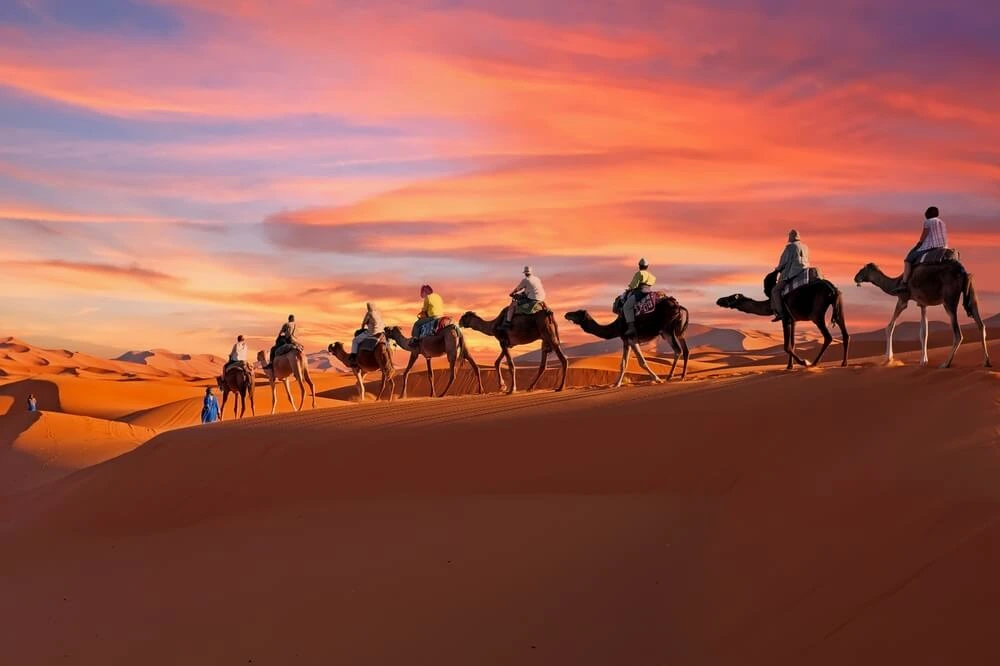
Towering golden sand dunes of Erg Chebbi in Merzouga, Morocco

The Experience in Merzouga

Merzouga offers the quintessential, immersive desert experience. Because the dunes are so massive, when you venture deep into them on a sunset camel trek, you completely lose sight of civilization. The sand is incredibly fine and takes on stunning fiery orange and red hues at dawn and dusk. It is a world-class destination for photography, adrenaline-pumping ATV quad biking, sandboarding, and experiencing a luxurious night under the stars in a Sahara desert camp.

Pros of Merzouga

  • Massive, iconic "sea of sand" dunes (up to 150m high).
  • Highly immersive deep-desert camel trekking.
  • Incredible sunrise and sunset photography opportunities.
  • Abundant adventure sports (sandboarding, ATVs, dune bashing).

Cons of Merzouga

  • Far from Marrakech (approx. 9-10 hours driving one way).
  • Requires a minimum 3-day tour, but ideally 4 days.
  • Can be crowded with tourists and ATVs during peak seasons.

The Zagora Desert: The Authentic "Gateway to the Sahara"

Zagora is a town located in the spectacular Draa River valley. It famously holds a sign reading "Timbuktu, 52 days" (by camel), highlighting its history as a major trading outpost. The landscape here is fundamentally different from Merzouga. The desert immediately surrounding Zagora (often referred to as the Tinfou dunes) is characterized by a "Hamada"—a flat, rocky, and arid desert plateau with smaller, more scattered hills of sand.

The Experience in Zagora

The biggest appeal of Zagora is its geographical proximity to major hubs. Located about 6 hours from Marrakech, it is the most viable option if you only have time for a 2-day desert tour from Marrakech. The journey to Zagora is arguably just as beautiful as the destination, taking you through the lush, palm-filled oasis of the Draa Valley, dotted with ancient mud-brick Kasbahs.

A Note on Erg Chigaga

It is important to clarify that Zagora itself does not have huge dunes. However, if you travel past Zagora to M'Hamid, and then take a 2-to-3 hour off-road 4x4 drive, you will reach Erg Chigaga. Erg Chigaga is a massive, wild sea of dunes that rivals Merzouga. It is incredibly remote and less touristy, but reaching it requires a minimum of a 3 to 4-day trip and a dedicated 4x4 vehicle.

Pros of Zagora

  • Closer to Marrakech (approx. 6 hours driving time).
  • Perfect for a quick 2-day / 1-night desert escape.
  • The highly scenic drive through the lush Draa Valley oasis.
  • Generally quieter and less touristy than Merzouga.

Cons of Zagora

  • Dunes are small, flat, and scattered (rocky terrain).
  • You won't get the "classic" towering sand dune photos.
  • Limited adventure activities compared to Merzouga.

The Drive: Marrakech to the Sahara

For most travelers, the journey begins in Marrakech. Understanding the drive is crucial to making your decision between Merzouga and Zagora.

Route to Merzouga (560km)

The road to Merzouga is an epic Moroccan road trip. You will cross the High Atlas Mountains via the winding Tizi n'Tichka pass (2,260m). Standard 3-day tours break up the 10-hour drive by stopping overnight in the stunning Dades Gorge or Tinghir. Along the way, you will visit the UNESCO World Heritage site of Ait Benhaddou (famous for Game of Thrones and Gladiator) and the cinematic city of Ouarzazate.

Route to Zagora (350km)

The drive to Zagora also crosses the High Atlas Mountains but then veers south through the Anti-Atlas range into the Draa Valley. This valley is Morocco's longest river, bordered by millions of date palms and centuries-old Kasbahs. It is a visually stunning 6-hour drive that can be comfortably done in a single day, arriving just in time for a sunset camel trek.

Head-to-Head Comparison Table

Here is a quick, scannable breakdown to help you make your final choice for your Morocco trip.

Feature Merzouga (Erg Chebbi) Zagora Desert
Landscape Towering, continuous golden sand dunes up to 150m. Winner Flat, rocky hamada with small, scattered sand hills.
Distance from Marrakech ~560 km (9 to 10 hours driving). ~350 km (6 hours driving). Winner
Minimum Time Needed 3 Days / 2 Nights (4 Days Recommended). 2 Days / 1 Night. Winner
Camel Trek Experience Deeply immersive; riding deep into high dunes. Winner Shorter ride near the edge of the rocky desert.
Atmosphere Classic Sahara dream, highly photogenic, adventurous. Authentic, historical trading route, very quiet.

The Final Verdict: Which Desert Should You Choose?

There is no "wrong" choice, but there is a right choice for your specific itinerary. Let's break it down by traveler type:

  • For Photographers & Dreamers: MERZOUGA. If your main goal in Morocco is to see giant, sweeping sand dunes and take iconic Instagram photos, Merzouga is the only choice. The 10-hour drive is 100% worth it.
  • For Weekend Warriors & Short Trips: ZAGORA. If you only have a 2-day window in your schedule, do not attempt Merzouga (you will spend 20 hours in a car). Go to Zagora. You still get a camel ride, a night under the stars, and a beautiful road trip.
  • For Hardcore Adventurers: ERG CHIGAGA. If you have 4+ days, want huge dunes, but hate tourist crowds, book a 4x4 expedition past Zagora into the deep, wild dunes of Erg Chigaga.

Whichever you choose, spending a night under the stars in a luxury desert camp, sipping sweet mint tea around a campfire, and listening to traditional Berber drumming will be an unforgettable highlight of your Moroccan adventure.

Frequently Asked Questions

How far is Merzouga from Marrakech?

Merzouga is approximately 560 kilometers (350 miles) from Marrakech. The journey by car or minibus takes around 9 to 10 hours of driving, not including stops. We highly recommend breaking this up into a 3-day or 4-day tour, usually stopping at Ait Benhaddou and the Dades Gorge.

Can I visit the Sahara desert in a 2-day tour?

Yes, but only if you go to Zagora. It is located about 6 hours from Marrakech, allowing you enough time to travel there, enjoy a sunset camel ride, spend the night in a camp, and return to Marrakech the next day.

What is the difference between Erg Chebbi and Erg Chigaga?

Erg Chebbi (located at Merzouga) features towering, easily accessible golden dunes right next to the town. You can step out of your hotel and walk into the dunes. Erg Chigaga (located further south past Zagora) is more wild, remote, and difficult to reach, requiring a couple of hours of off-road 4x4 driving to find the large dunes.

Are desert camps cold at night?

It depends heavily on the season. In the summer (June to August), nights are pleasantly warm. However, in the winter months (November to February), desert temperatures drop dramatically at night, sometimes nearing freezing. Our luxury camps provide thick blankets and heating, but packing warm thermal layers is absolutely essential if traveling in winter.

Is it safe to visit the Sahara Desert in Morocco?

Yes, visiting the Moroccan Sahara is very safe. Tourism is a massive industry here, and the locals are incredibly welcoming and protective of guests. As long as you book with a reputable tour operator and follow your guide's instructions (especially regarding hydration and sun protection), you will have a perfectly safe and amazing time.

Merzouga or Zagora: the decision in four questions

  1. How many days do you have? Two days from Marrakech means Zagora. Three or more opens up Merzouga, and four lets you finish in Fes instead of driving back.
  2. What do you picture when you think of the Sahara? If it is tall, rippling orange dunes, only Merzouga delivers that. Zagora is more about the palm groves and kasbahs of the Drâa Valley.
  3. Where does your trip end? Merzouga sits on the natural route between Marrakech and Fes, so it fits a one-way itinerary. Zagora is a round trip from Marrakech.
  4. How do you feel about long drives? Both trips involve several hours in the vehicle each day, but the Merzouga route spreads around 9 to 10 hours of driving over a day and a half each way, with some of Morocco's best scenery.

For most travellers the answer is Merzouga, as long as the extra day fits. If it really does not, Zagora is a pleasant, more relaxed alternative rather than a poor substitute.

Is a 2 day desert trip from Marrakech to Merzouga possible?

Technically yes, but it is not a trip we recommend. Merzouga is roughly 560 km from Marrakech, so a 2-day round trip means around 9 to 10 hours of driving on each day, arriving at the dunes just in time for the camel ride and leaving at dawn. You would see the dunes, but very little of Aït Benhaddou, the Dadès Valley or the Todra Gorge on the way.

If two days is all you have, the 2 day desert tour from Marrakech to Zagora is the sensible choice: a scenic drive over the High Atlas and through the Drâa Valley, a sunset camel ride and a night in a desert camp. With three days, the 3 day desert tour from Marrakech to Merzouga covers the classic route at a sustainable pace.

Starting from Fes

From Fes, Zagora is not a practical option. Merzouga is about 7 to 8 hours away via Ifrane and the Ziz Valley, so the 2 day desert tour from Fes to Merzouga works as a fast return trip, while 3 days or more lets you continue to Marrakech.

The desert camp experience in Merzouga and Zagora

In both deserts the evening follows a similar pattern: a camel ride at sunset, mint tea, a tagine dinner, music around the fire and a sky full of stars. The difference is the setting. In Erg Chebbi the camps sit among high dunes, so you can climb a crest for sunset and sunrise. Around Zagora the camps are on the edge of smaller dunes, with the stony desert and distant mountains in view.

Near Merzouga, our comfort camp has private tents, normally for two people, each with its own bathroom and toilet, and a partner camp with air-conditioned tents is also used. On luxury-category tours the upgrade applies at the desert camp. The camel ride to camp depends on camel availability that day; if none are free, you go by 4x4 with a sunset stop on the dunes and ride camels the next morning on the way back.

Erg Chebbi is popular, and there are many camps across the dunes, so complete isolation cannot be guaranteed anywhere there, and we do not organise wild or mobile bivouacs. If you want more variety, two nights can combine a camp near a nomad village with a comfort camp with a hot shower and private tent. See a night in a Merzouga desert camp for more detail.

Activities: what you can do in each desert

ActivityMerzouga (Erg Chebbi)Zagora
Camel rideInto high dunes, around an hour or moreShorter ride on the edge of the desert
Quad biking and buggiesWidely available in the dunesMore limited
SandboardingExcellent on steep dune facesPossible on small dunes
CultureKhamlia Gnaoua music, Rissani market, nomad familiesDrâa Valley kasbahs and palm groves, the famous Timbuktu sign
Extra nightEasy to add, with 4x4 excursionsLess to fill a second day

If you are an active traveller who wants more than one evening in the sand, Merzouga offers far more. Explore the options on our page about Sahara desert activities in Merzouga.

Seasons and practical tips for either desert

  • Spring and autumn bring warm days and cool nights, ideal for both deserts.
  • Summer afternoons often pass 40 °C, so camel rides happen at sunset and sunrise; ask about air-conditioned tents in Merzouga.
  • Winter days are sunny, but nights can drop close to freezing and snow occasionally closes the Tizi n'Tichka pass for short periods.
  • Bring layers, a scarf against sun and sand, sun cream, a torch and a small overnight bag for the camp.
  • Carry cash in dirhams (MAD), a closed currency, for lunches, drinks and tips.

For a month-by-month view, see our guide to the best time to visit Morocco.

Frequently asked questions

Is Zagora really the Sahara?

Zagora lies on the northern fringe of the Sahara, but the landscape around it is mostly stony hamada with a few small dune areas. It gives you a taste of the desert, a camel ride and a camp night. For the high, continuous sand dunes most people associate with the Sahara, you need Erg Chebbi near Merzouga.

Which is better for families with children, Merzouga or Zagora?

It depends on how children cope with car journeys. Zagora's shorter drive suits young children on a two-day trip. Older children usually prefer Merzouga, where the big dunes, sandboarding and camel rides are more exciting. On a private tour to Merzouga we can add a night or extra stops to make the driving easier.

Can I visit both Merzouga and Zagora on one tour?

Yes, on a longer private tour. A route can go from Marrakech to Merzouga via the Dadès and Todra gorges, then return through Rissani, Alnif and the Drâa Valley, passing close to Zagora. Ask us when requesting a quote and we will suggest how many days it needs.

Does Merzouga feel too touristy?

Merzouga is the most visited desert area in Morocco, so in peak season you will see other camps and quad riders around the edges of Erg Chebbi. Away from the busiest spots and at sunrise it still feels vast and quiet. Choosing spring or autumn weekdays and timing activities early helps.

How much more time does Merzouga need compared to Zagora?

About one extra day. From Marrakech, Zagora works as a 2-day, 1-night trip, while Merzouga needs at least 3 days and 2 nights. Many travellers then add a fourth day, either for a second night in the dunes or to finish in Fes rather than drive back to Marrakech.

Plan your Morocco trip with us

Send us your dates, group size and the places you would like to see. A local travel planner replies with a tailored itinerary and a free quote.

No payment required — free, no-obligation quote.